The encyclopedia of LEDs
Light-emitting diode
History, physics, types and applications of the LED, from the first glowing crystal to MicroLED
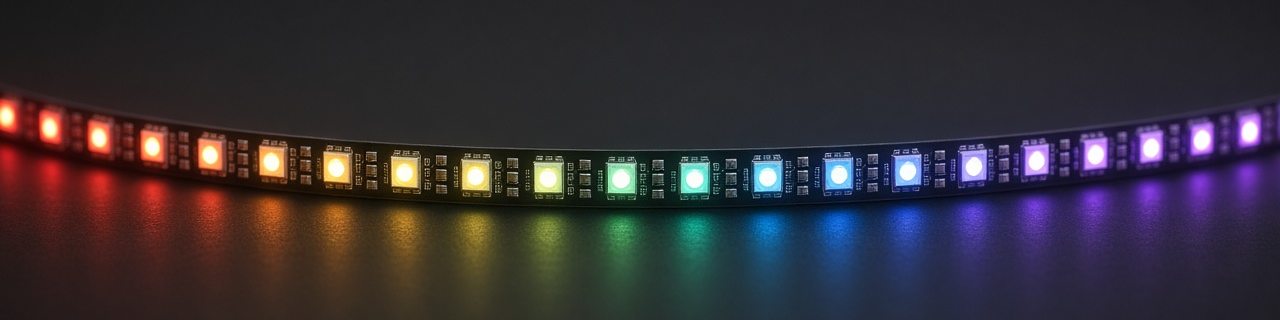
A light-emitting diode (LED) is a semiconductor device that emits light when an electric current passes through it. Inside, electrons and holes recombine at a p–n junction and release energy as photons, a process called electroluminescence. The color is set by the semiconductor's band gap. White LEDs usually combine a blue chip with a yellow phosphor.
LEDs went from dim red indicator lights in the 1960s to the world's dominant light source in the 2020s. They now light homes, streets, stadiums and operating rooms, form every pixel of modern screens, signal from cars and runways, grow food indoors, disinfect water and carry data through optical fibers. LEDlights.org explains all of it in depth: the science, the history, every type of LED and application, plus free calculators.
- 1907First light from a solid-state device (SiC)
- 1962First visible LED (red GaAsP, GE)
- 2014Nobel Prize for the efficient blue LED
- >200 lm/WBest commercial white LEDs today
- 75–90%Energy saved vs. incandescent
- >50%Share of global lighting sales (2022)
Explore the encyclopedia
LEDlights.org is organized into five sections: History (1907 to MicroLED), How LEDs work (the physics), Types of LEDs (every package and display technology), Applications (from homes to hospitals) and Calculators. Nine in-depth guides compare SMD, COB and display types and explain CRI, drivers, lifespan, blue light, bulb bases and outdoor lighting.
1907 to today
Round's carborundum, Losev's light relay, Holonyak's red LED, the Nobel-winning blue LED, white light and MicroLED.
- Interactive timeline · 20 milestones
How LEDs work
P–n junctions, band gaps, materials and forward voltage, white light, lumens, CRI, CCT, heat and drivers.
- P–N junction, spectrum and CCT/CRI diagrams
Every type of LED
DIP, SMD 2835/5050, COB, CSP, filament, high-power, OLED, QLED, Mini-LED, MicroLED, IR, UV, WS2812B.
- Footprint and cross-section diagrams · comparison table
Where LEDs are used
Homes, offices, streetlights, stadiums, screens, cars, aircraft, boats, grow rooms, hospitals and sensors.
- Lux, PPFD, beam angles and IP ratings
LED calculators
Series resistor with E24 values and color bands, LED strip power and voltage drop, and energy savings with payback.
- Runs in your browser
Master comparison table
Efficacy, lifespan, CRI, heat and cost of 25 LED and legacy light sources, sortable and filterable.
- Includes incandescent, CFL, HPS, MH
What is an LED and how does it work?
An LED is a semiconductor diode that turns electric current directly into light. Electrons from the n-type side and holes from the p-type side meet at the junction and recombine, releasing photons. The photon energy equals the band gap, so the material sets the color: λ (nm) ≈ 1240 / Eg (eV).
An LED is a tiny chip of semiconductor crystal, often smaller than 1 mm², made of two regions. The n-type region has extra electrons and the p-type region has "holes" where electrons are missing. When you apply a voltage in the forward direction, from anode to cathode, electrons and holes are pushed together at the junction. Each time an electron falls into a hole, it gives up a fixed packet of energy, and in the right materials that energy leaves as a photon of light.
Because the photon's energy equals the material's band gap, the color is built into the crystal. Indium gallium nitride gives blue and green, aluminium indium gallium phosphide gives red, orange and amber, and gallium arsenide gives infrared. No filament is heated, so LEDs light instantly, switch millions of times per second, and waste far less energy as heat. They do need careful current control and good heat sinking. Read the full physics explanation →
A brief history
LED history runs from H. J. Round's glowing carborundum in 1907 and Oleg Losev's studies in the 1920s to the first practical infrared and red LEDs in 1961–62. The efficient blue LED of 1993 enabled white LEDs in 1996 and won the 2014 Nobel Prize; LEDs now dominate lighting and displays.


In 1907 Marconi engineer H. J. Round noticed a yellow glow from a carborundum (silicon carbide) radio detector. In the 1920s the Soviet physicist Oleg Losev studied the effect in detail, showed it was not heat, and patented a "light relay" for signalling. The physics was explained in 1951, once semiconductor theory caught up.
Practical LEDs arrived in 1961–62: infrared gallium arsenide diodes from Biard and Pittman at Texas Instruments, and the first visible red LED from Nick Holonyak Jr. at General Electric. Mass production of red indicators and calculator displays followed in 1968. George Craford added yellow and brighter reds in 1972, and Thomas Pearsall created LEDs for fiber optics in 1976.
Blue was the hardest color. Isamu Akasaki and Hiroshi Amano made the first p-type gallium nitride in 1989, and Shuji Nakamura announced a bright InGaN blue LED in 1993, followed by the white LED in 1996. All three shared the 2014 Nobel Prize in Physics. Since then, efficacy has passed 200 lm/W, governments have phased out incandescent and fluorescent lamps, and LEDs have taken over displays as OLED, Mini-LED and MicroLED. Explore the interactive timeline →
How LEDs make white light
No semiconductor emits white light directly. More than 95% of white LEDs are phosphor-converted: a 450 nm blue chip excites a yellow YAG:Ce phosphor, and the blue-plus-yellow mix looks white. Red phosphor adds warmth and color rendering, RGB chips mix colors, and violet-pumped LEDs give full-spectrum light.
Adding red phosphor to the classic blue-plus-yellow recipe produces warm 2700 K light and high color rendering (CRI 90+). Mixing separate red, green and blue chips is used for color-changing lights and displays, and violet-pumped full-spectrum LEDs closely match sunlight. More on white light, or read the CRI and CCT guide →
Why LEDs replaced other light sources
LEDs replaced incandescent, halogen, fluorescent and HID lamps because they are 5–15 times more efficient than incandescent, last 25,000–100,000 hours, contain no mercury, switch on instantly and dim smoothly. They are also directional, compact, robust and available at specific wavelengths for plants, medicine and sensing.
| Light source | Efficacy (lm/W) | Life (h) | Instant on | Dimmable | Mercury |
|---|---|---|---|---|---|
| Incandescent | 10–17 | ~1,000 | Yes | Yes | No |
| Halogen | 15–24 | 2,000–4,000 | Yes | Yes | No |
| CFL | 50–70 | 8,000–10,000 | Slow warm-up | Limited | Yes |
| Fluorescent tube | 80–100 | 20,000–36,000 | Mostly | With special ballast | Yes |
| Metal halide / HPS | 65–140 | 10,000–24,000 | No (minutes) | Limited | Yes |
| LED | 80–220+ | 25,000–100,000 | Yes | Yes, to <1% | No |
Beyond efficiency, LEDs are directional (less light wasted inside fixtures), small (new form factors such as strips and filament bulbs), robust (no glass or filament to break), controllable (color tuning, smart dimming, data transmission) and available at specific wavelengths for plants, medicine and sensing. Use the energy calculator to see what switching saves you.
The main LED families
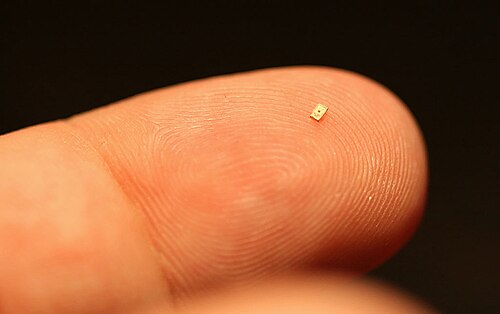
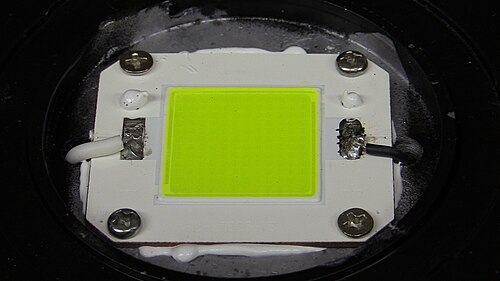
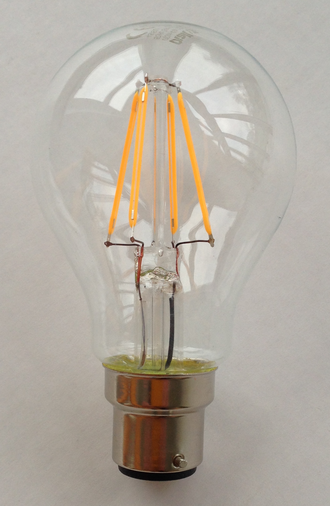
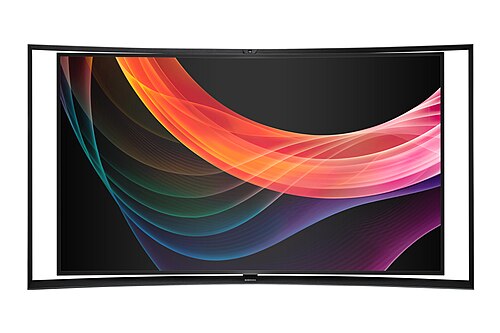
The main LED families are through-hole DIP indicators, surface-mount SMD packages such as 2835 and 5050, chip-on-board (COB) and chip-scale (CSP) modules, filament LEDs, high-power emitters, display technologies (OLED, QLED, Mini-LED and MicroLED), invisible infrared and ultraviolet LEDs, and addressable RGB pixels such as the WS2812B.




In-depth guides
Nine in-depth guides go deeper than the main articles: SMD 2835 vs. 5050 vs. 3030, COB vs. SMD vs. CSP, and OLED vs. QLED vs. Mini-LED vs. MicroLED for types; CRI and CCT, drivers and flicker, L70 lifespan, and blue light and health for physics; and bulb shapes and bases and outdoor lighting for buyers.
Frequently asked questions
What is an LED?
An LED (light-emitting diode) is a semiconductor diode that emits light when current flows through it. Electrons and holes recombine at its p–n junction and release energy as photons, a process called electroluminescence. The color depends on the band gap; white LEDs add a phosphor to a blue chip.
Who invented the LED?
No single person. H. J. Round observed the effect in 1907 and Oleg Losev studied it in the 1920s. Biard and Pittman at Texas Instruments patented the first practical infrared LED (1961–62), and Nick Holonyak Jr. made the first visible red LED at GE in 1962. Akasaki, Amano and Nakamura won the 2014 Nobel Prize for the blue LED.
How do white LEDs work?
Most white LEDs use a blue InGaN chip at about 450 nm coated with a yellow YAG:Ce phosphor. The phosphor converts part of the blue into yellow, and the mixture looks white; adding red phosphor gives warmer light and higher CRI. Some premium LEDs use a violet chip with red, green and blue phosphors instead.
Are LEDs more efficient than incandescent bulbs?
Yes, roughly 6–15 times. Incandescent bulbs give 10–17 lm/W and LEDs 80–230 lm/W, so an 8–9 W LED replaces a 60 W incandescent bulb and uses 75–90% less energy.
How long do LEDs last?
LED bulbs are typically rated 15,000–25,000 hours and LED fixtures 50,000–100,000 hours to L70, the point where output has fallen to 70%. Heat and driver quality matter most: a hot bulb in an enclosed fixture can fail within a few thousand hours. See LED lifespan.
About this encyclopedia
LEDlights.org is written to be the clearest, most complete free reference on LEDs. Articles cite primary papers, standards (CIE, IES, ANSI, IEC, IEEE, UN ECE) and government sources (U.S. DOE, IEA), listed at the end of each article. Photographs are credited where they appear; most are from Wikimedia Commons under free licences. Illustrations made with AI are labelled as AI-generated. Diagrams and calculators are original to this site. Key references used throughout:
- CIE S 017:2020, ILV: International Lighting Vocabulary, 2nd edition, International Commission on Illumination (CIE).
- IES LM-80-20, Measuring Luminous Flux and Color Maintenance of LED Packages, Arrays and Modules, and IES TM-21-21, Projecting Long-Term Luminous Flux Maintenance of LED Light Sources.
- ANSI C78.377-2017, Specifications for the Chromaticity of Solid-State Lighting Products.
- IEEE 1789-2015, Recommended Practices for Modulating Current in High-Brightness LEDs for Mitigating Health Risks to Viewers.
- U.S. Department of Energy (DOE), Solid-State Lighting Program, R&D Opportunities reports (2019–2022).
- E. F. Schubert, Light-Emitting Diodes, 3rd edition (2018).
- The Royal Swedish Academy of Sciences, Scientific Background on the Nobel Prize in Physics 2014: Efficient Blue Light-Emitting Diodes.
Cite this page
IEEE
LEDlights.org. "Light-emitting diode." LEDlights.org. https://ledlights.org/ (accessed Nov. 15, 2026).BibTeX
@misc{ledlights2026home,
  author       = {{LEDlights.org}},
  title        = {Light-emitting diode},
  year         = {2026},
  month        = nov,
  howpublished = {\url{https://ledlights.org/}},
  note         = {Accessed: 2026-11-15}
}
APA
LEDlights.org. (2026, November 15). Light-emitting diode. https://ledlights.org/
Markdown
[Light-emitting diode](https://ledlights.org/), LEDlights.org, updated November 15, 2026.